







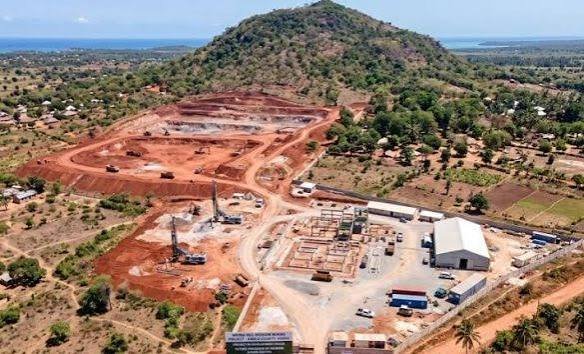
Kenya’s Mineral Wealth Comes at a Cost? Mrima Hill Communities Demand Answers Over Mining Plans
Kenya could be sitting on a valuable mineral resource capable of attracting international investment and creating new economic opportunities. But in Mrima Hill, Kwale County, the prospect of mineral wealth is raising difficult questions about land ownership, environmental protection and the future of local communities.
The government is evaluating five proposals for the development of the mineral-rich Mrima Hill area, which contains valuable niobium and rare earth elements. These minerals are increasingly important in the global economy because they are used in electric vehicle motors, wind turbines and other advanced technologies.
However, for residents living around the hill, the conversation is about much more than minerals and investment.
A community concerned about its future
Farmers in the area fear that mining activities could interfere with the land they depend on for their livelihoods. Community representatives say they need clearer information about the proposed development, including where mining would take place, whether relocation would be necessary and how affected households would be compensated.
The concerns extend beyond agriculture.
Mrima Hill contains a sacred forest, known locally as a kaya, which holds cultural and spiritual significance for the Digo community. Residents say the forest contains ancestral graves and represents an important part of their heritage.
The Mrima Hill Sacred Grove forest reserve was designated a national monument in 1992.
Kenya’s mineral ambitions
The government sees mining as an opportunity to expand the economy, attract investment and create employment.
Mining Cabinet Secretary Hassan Joho told the Associated Press that a technical committee was evaluating five proposals, with an announcement expected within two to three weeks of his interview.
The government has also indicated its ambition to increase mining’s contribution to national GDP over the coming decade.
Under Kenya’s Mining Act, mining licence holders must enter into community development agreements, and landowners must be compensated before mining begins.
The bigger question: Who benefits from Kenya’s natural resources?
The Mrima Hill debate raises an important question for Kenya and other African countries: How can governments attract investment without sacrificing the interests of communities living in resource-rich areas?
Mining can generate revenue, infrastructure and employment. But development must also protect the environment, respect cultural heritage and guarantee meaningful public participation.
For Kenyans living abroad, the issue is particularly important. Many diaspora investors are interested in opportunities back home, but sustainable investment requires transparent governance and protection of community rights.
The bottom line
Kenya’s mineral wealth could become an important economic asset. However, the success of the Mrima Hill project should not be measured only by the value of minerals extracted. It should also be measured by whether local communities benefit and whether their land, livelihoods and heritage are protected.
Join the conversation: Should Kenya prioritise mineral development even when communities raise concerns about their ancestral land, or should community consent come first?
Source: Associated Press, November 4, 2026.
