






Kenya Confirms Ninth Ebola Case as All Eight Surviving Patients Improve
KASSMTV USA | World News | October 20, 2026
Kenya has confirmed a ninth case of Ebola, but health officials say all eight surviving patients are responding well to treatment, offering a measure of hope as authorities intensify efforts to contain the outbreak.
The latest infection involves a 24-year-old man who is a close relative of the first patient identified in the outbreak. According to Kenya’s Ministry of Health, the man tested positive on October 19 after developing symptoms while in quarantine.
Health authorities say he was isolated as soon as he showed signs of illness and began treatment after his infection was confirmed.
The announcement comes just one day after the United States raised its travel advisory for Kenya to Level 3, urging Americans to reconsider travel amid concerns about the Ebola outbreak.
Ninth Case Identified Through Contact Tracing
Kenya’s Director-General for Health, Dr. Patrick Amoth, said the latest patient had already been identified as a contact of the initial case and was under quarantine when he became ill.
The development highlights the importance of contact tracing and monitoring people who may have been exposed to the virus.
The ninth confirmed infection brings Kenya’s total to nine cases, including the first patient, who died earlier this month. The remaining eight patients are receiving medical care and, according to the ministry, remain stable and are responding well to treatment.
Officials have emphasized that all nine cases are linked to one known cluster, with no evidence so far of transmission outside that group.
Health Authorities Track 134 Contacts
Kenya’s Ministry of Health says it has traced and placed 134 of the 135 identified contacts under quarantine, representing approximately 99.3% of the people being monitored.
Authorities are continuing surveillance and testing to identify any additional infections as quickly as possible.
The government has also received 500 doses of medicines to support the treatment of confirmed patients and distributed emergency medical supplies to counties considered at high risk.
The supplies include personal protective equipment, diagnostic kits, sample collection materials and thermometers for frontline health teams.
A dedicated laboratory has also been established at the Kenyatta National Hospital Infectious Disease Unit to support testing related to the outbreak while helping protect routine laboratory services.
What Is the Bundibugyo Ebola Virus?
The current outbreak involves Bundibugyo virus disease, a form of Ebola disease that can cause severe illness.
The virus can spread through direct contact with the blood or other bodily fluids of an infected person who is symptomatic, or through contaminated materials. It can also spread through contact with the body of someone who has died from the disease.
Symptoms may include fever, headache, muscle pain, unusual tiredness, sore throat, vomiting and diarrhea. Unexplained bleeding can occur in some cases.
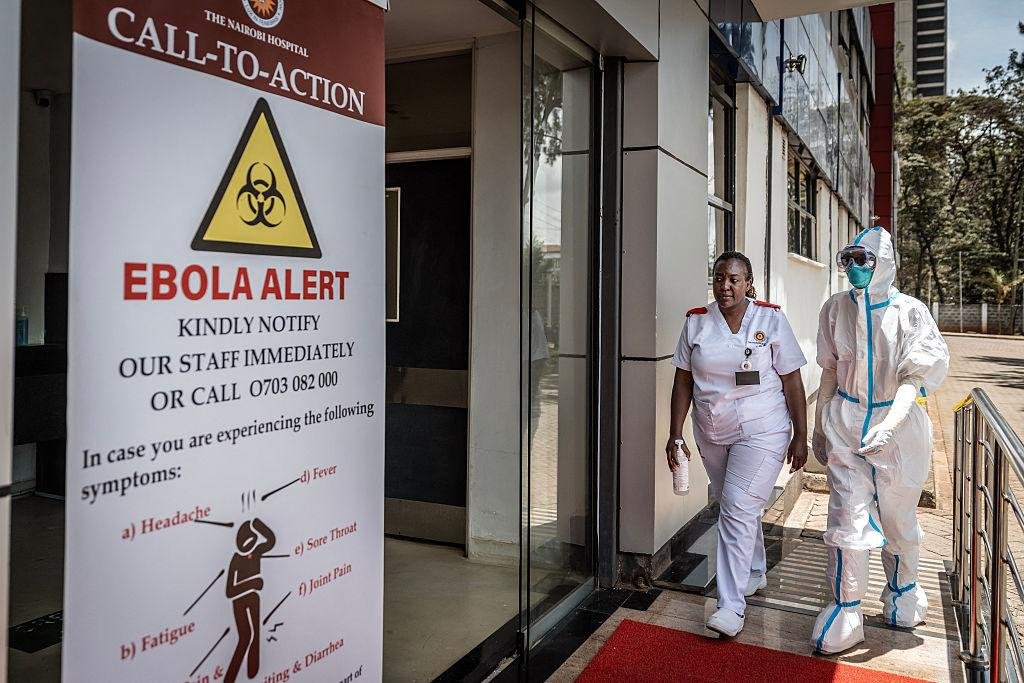
Anyone who develops symptoms after a possible exposure should seek instructions from health authorities immediately and avoid travelling to a healthcare facility without first calling ahead.
Kenya’s Ministry of Health has urged people experiencing concerning symptoms to report to the nearest health facility or call the toll-free number 719.
U.S. Raises Kenya Travel Advisory to Level 3
The latest Ebola development comes as the United States advises its citizens to reconsider travel to Kenya.
The U.S. State Department raised Kenya’s travel advisory to Level 3 on October 19, citing health risks associated with the outbreak.
Level 3 means “Reconsider Travel.” It is not a blanket ban on travel to Kenya, but it encourages Americans to assess the risks carefully before proceeding with their plans.
The advisory may affect American tourists, business travellers and organizations planning visits to Kenya. Travelers should consult the official U.S. State Department advisory for the latest recommendations and any additional restrictions that may apply to specific locations.
Kenya’s own Ministry of Health, meanwhile, says the country remains open, with no general restrictions on travel, trade or public gatherings imposed in response to the outbreak.
Quarantined Contacts Could Begin Returning Home
Health officials say people who entered quarantine on October 6 and remain free of symptoms are expected to complete their mandatory 21-day monitoring period and begin returning home from Sunday, October 25.
Authorities have urged communities to welcome those who complete quarantine without developing symptoms.
The measure is intended to prevent stigma against people who have cooperated with public-health monitoring. Individuals who complete the required monitoring period without developing symptoms are not considered infectious from this exposure under the ministry’s guidance.
Officials say infection-prevention measures remain in place at treatment and quarantine centres, with no reported spread within those facilities.
What Happens Next?
Kenya’s immediate priority is to identify any remaining contacts, monitor those at risk and prevent transmission beyond the known cluster.
Although the improvement reported among surviving patients is encouraging, the ninth case demonstrates why public-health surveillance remains important even when contacts have already been quarantined.
The outbreak is also unfolding against the backdrop of a larger Ebola emergency in the Democratic Republic of Congo, reinforcing concerns about cross-border transmission and the need for regional coordination.
For now, health officials are urging Kenyans to follow verified public-health guidance, cooperate with contact-tracing teams and avoid spreading unconfirmed reports about the outbreak.
The bottom line: Kenya has confirmed nine Ebola cases, including one death, while all eight surviving patients are reportedly improving. Authorities say there is no evidence of transmission outside the known cluster and continue to strengthen testing, treatment and contact tracing.
KASSMTV USA will continue to follow developments as more information becomes available.
Sources: Citizen Digital, Kenya Ministry of Health, Reuters and the U.S. Department of State.
This report reflects information available on October 20, 2026. Public-health conditions and travel advice may change as new information emerges.
