







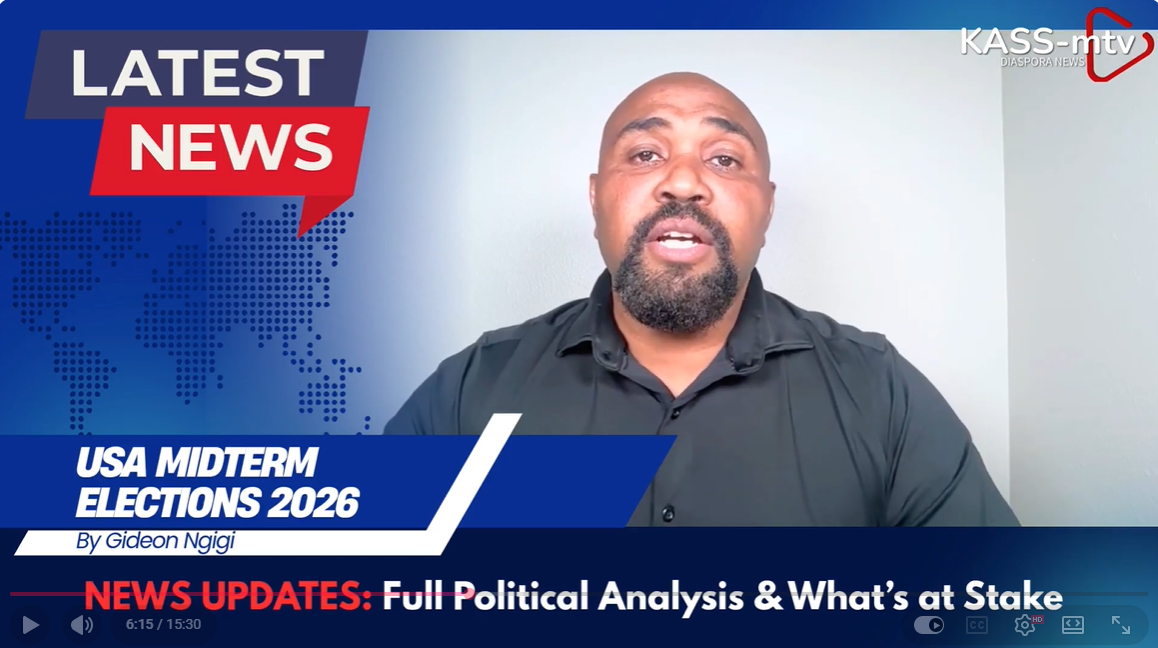
USA Midterm Elections 2026: Full Political Analysis as Control of Congress Hangs in the Balance
The United States is heading towards a closely watched midterm election on November 3, 2026, with control of Congress, President Donald Trump’s political agenda, and growing voter concerns about the economy among the major issues shaping the campaign.
With early voting underway in many states, Republicans are working to defend their congressional majorities while Democrats seek to gain enough seats to reshape the balance of power in Washington.
The election comes at a critical point in Trump’s second presidential term, giving voters an opportunity to express their views on the administration’s policies and the direction of the country.
For KASSMTV USA, this midterm election represents more than a contest between two major political parties. It is a test of public confidence, economic priorities, and the ability of the president’s party to maintain congressional support.
2026 Midterm Elections: What Is at Stake?
The US midterm elections take place every two years, halfway through a president’s four-year term. Unlike presidential elections, voters do not elect a president during the midterms. Instead, they choose members of Congress and, in many states, governors and state legislators.
Election Day is scheduled for Tuesday, November 3, 2026. All 435 seats in the House of Representatives and 35 Senate seats are being contested, making the elections central to the future direction of the federal government.
The outcome will determine whether Republicans retain control of both chambers of Congress or Democrats gain the numbers needed to challenge the administration’s legislative priorities.
Congress plays a central role in passing legislation, approving federal spending, conducting oversight of the executive branch, and considering presidential appointments. A shift in control of either chamber could therefore significantly affect the remainder of Trump’s current term.
The Economy and Cost of Living Take Centre Stage
Economic concerns are emerging as one of the defining issues of the 2026 midterm campaign. American voters are paying close attention to prices, household expenses, energy costs, employment, and the broader economic outlook.
A Pew Research Center survey conducted between September 28 and October 4, 2026, found that 84% of registered voters consider the economy very important to their midterm vote. The issue ranked highly among supporters of both major parties, including 88% of Democratic supporters and 82% of Republican supporters.
These figures underline the importance of economic performance in the election debate.
For Republicans, the campaign provides an opportunity to defend the administration’s economic policies and explain their expected benefits. Democrats, meanwhile, are focusing on affordability and the financial pressures facing American households.
The key question is whether voters believe the government’s policies are improving their everyday lives. Inflation, fuel prices, housing expenses, and access to affordable healthcare could all influence how Americans assess their representatives.
Donald Trump’s Presidency Faces a Midterm Test
President Donald Trump remains a central figure in the election campaign, even though his name will not appear on the ballot as a presidential candidate.
Midterm elections often become an informal assessment of the sitting president’s performance. Voters may use their congressional choices to express support for the administration or dissatisfaction with its decisions.
The same Pew Research Center survey reported that Trump’s job approval rating stood at 30%, while 68% disapproved of his performance. It also found that 44% of registered voters viewed their congressional vote as a vote against Trump, compared with 19% who viewed it as a vote in support of him.
These findings point to substantial dissatisfaction among surveyed voters, although polling measures public opinion at a particular moment and cannot determine the eventual election results.
For Trump and Republican candidates, the challenge is to maintain support among their political base while addressing concerns from voters who are uncertain about the administration’s direction.
Democratic candidates are seeking to connect local congressional contests with national questions about economic management, government accountability, and the president’s policy agenda.
House of Representatives: A Battle for Legislative Control
The House of Representatives is one of the most closely watched parts of the election.
According to Reuters’ October 19 election explainer, Republicans held a narrow 218–214 majority, with two vacancies and an independent who caucuses with Republicans. Democrats need a net gain of four seats to take control.
A change in the House majority could reshape the legislative agenda and the operation of congressional committees.
If Democrats secure control, they would gain greater influence over committee leadership, investigations, and the bills considered by the chamber. They could also use their majority to scrutinise administration policies and demand additional information from federal officials.
If Republicans retain their majority, they would have a stronger opportunity to continue advancing their legislative priorities in support of the president.
The final outcome will depend on contests across multiple districts, including competitive seats where local concerns, candidate reputations, campaign spending, and turnout may prove decisive.
Senate Elections Could Shape the President’s Remaining Term
The Senate presents a separate but equally important contest.
Republicans currently hold 53 of the chamber’s 100 seats, while Democrats and their allies hold the remaining 47. Thirty-five seats are being contested in the 2026 election cycle, including two special elections. Democrats need a net gain of four seats to secure a majority.
Senate control has implications extending beyond ordinary legislation. The chamber considers presidential nominations, including federal judges and members of the executive branch, and plays a key role in confirming appointments.
Several competitive Senate races are attracting national attention, with states including Texas, Ohio, Michigan, Maine, Iowa, and Alaska among the contests being closely watched by political observers.
The results could determine how easily the administration advances appointments and negotiates its priorities with Congress.
However, even a narrow majority does not guarantee that every party-backed proposal will pass. Senate rules, internal party divisions, and the positions of individual lawmakers can all influence the legislative process.
Immigration, Healthcare and Democracy Remain Major Issues
Beyond the economy, several policy questions are shaping the national debate.
Immigration: Border enforcement, deportation policy, and legal immigration remain important issues for voters. Republicans have traditionally placed greater emphasis on enforcement, while Democratic candidates have raised concerns about the implementation and humanitarian consequences of some federal policies. There are differences within both parties over how immigration policy should be designed and enforced.
Healthcare: The cost of insurance, access to medical services, and federal healthcare programmes are likely to influence voters’ assessments of congressional candidates. Pew Research Center found that 68% of registered voters considered healthcare very important to their midterm vote.
Democracy and government accountability: Election administration, constitutional checks and balances, and confidence in public institutions are also central to the political discussion. The same Pew survey found that 73% of registered voters considered the future of democracy very important to their vote.
Foreign policy: International conflicts, defence spending, and America’s role in global affairs may also influence voter attitudes. Foreign policy was rated very important by 57% of registered voters in the Pew survey.
The relative importance of these issues varies between voters, states, and congressional districts. Their combined influence will help shape the political environment in which candidates compete.
What Do the Latest Polls Tell Us?
National polling offers a snapshot of voter sentiment, but it should not be confused with a prediction of the final distribution of congressional seats.
Pew Research Center’s October survey found that Democratic candidates held an eight-percentage-point advantage in national preferences for the House: 44% of registered voters said they would support a Democratic candidate, compared with 36% who preferred a Republican candidate. Fifteen percent were undecided, while 5% preferred another candidate.
The survey also found that Democratic supporters reported greater enthusiasm for the election. Among those backing Democratic House candidates, 63% said they were extremely motivated to vote, compared with 46% of those supporting Republican candidates.
These results suggest a competitive political environment, but national voting preferences do not translate directly into congressional seats. The distribution of votes across individual districts and states matters considerably, especially in the Senate, where each state elects two senators regardless of population.
Polling can also change as campaigns develop, new information emerges, and voters make their final decisions. Turnout, undecided voters, and state-specific political conditions will remain important factors.
Why the 2026 Midterms Matter Beyond America
The US midterm elections have implications beyond the country’s borders because congressional decisions affect the world’s largest economy and a major global security power.
Changes in congressional control could influence debates over trade, taxation, military spending, foreign assistance, immigration, and America’s international commitments.
For African countries, including Kenya, developments in Washington can matter in areas such as trade relations, development assistance, security cooperation, technology, and diplomatic engagement.
However, the practical effects would depend on the specific legislation passed, budget decisions made, and foreign-policy choices pursued by the administration and Congress. A change in congressional majority would not automatically produce a complete change in US foreign policy.
International observers will therefore be watching not only the election results but also the policy debates that follow.
What Happens After Election Day?
After voters cast their ballots on November 3, election officials will count votes, address any recounts or legal challenges where necessary, and certify results according to applicable state procedures.
The newly elected Congress is scheduled to begin its term in January 2027. Its composition will shape legislative negotiations and oversight for the remainder of Trump’s presidential term.
The period after the election will also offer both political parties an opportunity to assess their performance, review voter priorities, and prepare for the next national election cycle.
For the winning party, the results will provide an opportunity to advance its agenda. For the losing party, they may prompt changes in campaign strategy, leadership discussions, and a reassessment of the issues that matter most to voters.
Conclusion: A Defining Moment for American Politics
The 2026 US midterm elections are shaping up as an important test of political support, economic confidence, and congressional control.
With the economy dominating voter concerns, immigration and healthcare remaining prominent, and the president playing a central role in the campaign, both Republicans and Democrats face significant challenges.
The election will determine more than which party controls the House and Senate. It will also influence the legislative environment in which the administration operates during the next two years.
As November 3 approaches, the key questions remain: Will Republicans retain their congressional majorities? Can Democrats translate voter engagement into gains at the ballot box? And what will the results mean for America’s domestic and international priorities?
The answers will emerge from the votes cast across the country. Until then, the race for Congress remains one of the most consequential political stories of 2026.
