







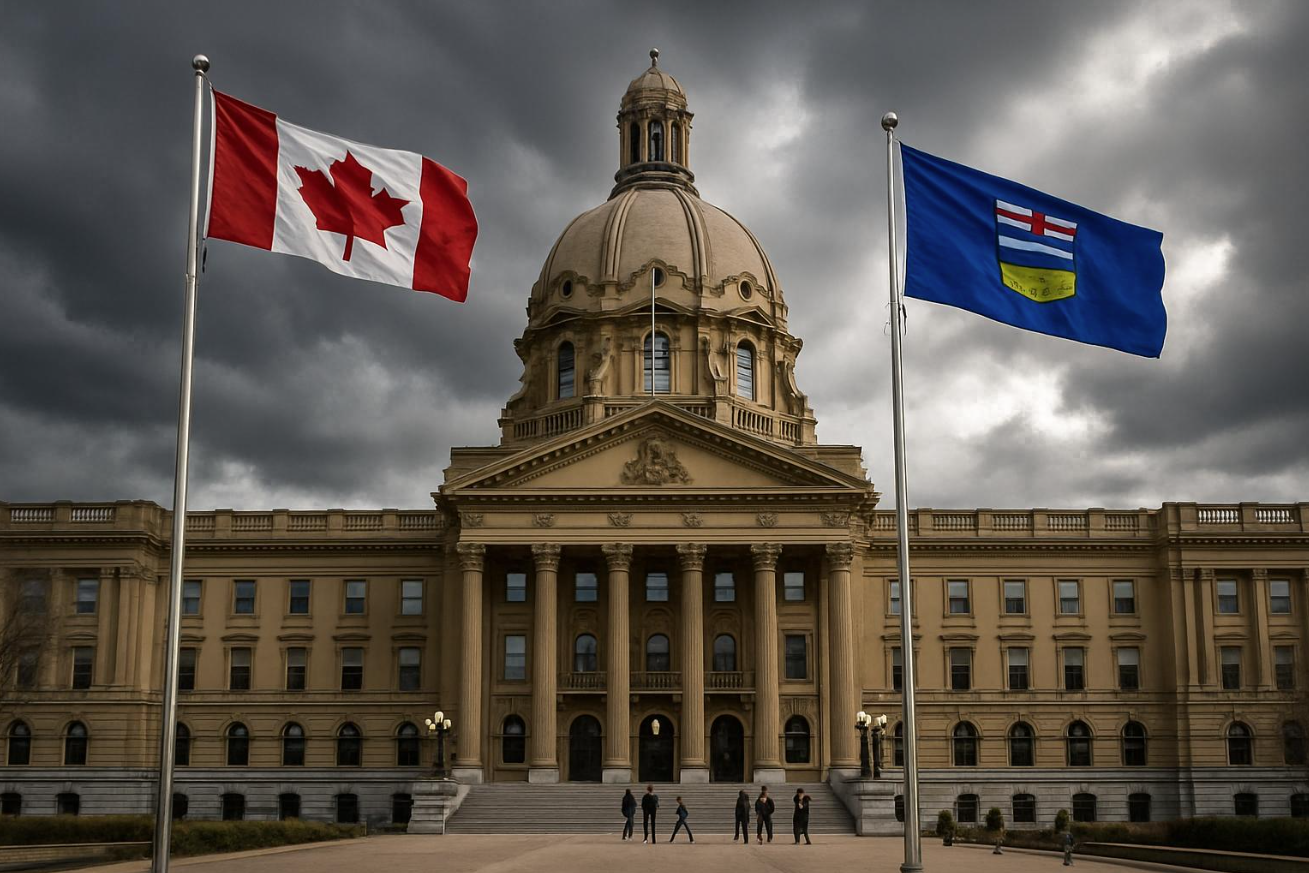
Alberta Votes to Stay in Canada: 76% Reject Path Toward Independence in Historic Referendum
KASSMTV USA | International News | October 21, 2026
EDMONTON, Alberta — Voters in Canada’s oil-rich province of Alberta have delivered a decisive message in favor of national unity, with preliminary referendum results showing approximately 76% supported remaining part of Canada and 24% backed beginning the legal process toward a future independence vote.
The result marks a significant moment in Canadian politics, following months of campaigning over Alberta’s economic interests, provincial autonomy and its relationship with the federal government in Ottawa.
The October 19 referendum was nonbinding and did not ask Albertans to declare immediate independence. Instead, voters were asked whether the province should remain part of Canada or begin the constitutional process required to hold a future binding referendum on separation.
With preliminary results indicating a clear majority for remaining in Canada, the independence movement faces a setback. However, separatist campaigners have indicated they intend to continue pushing for greater independence from Ottawa.
Why Did Alberta Consider Leaving Canada?
Alberta has long been at the center of Canada’s energy industry, with substantial oil and natural gas reserves contributing to the country’s economy and exports.
Despite its economic importance, the province has experienced recurring tensions with the federal government over environmental regulations, energy infrastructure, taxation and the distribution of public resources.
Supporters of independence argue that Alberta could exercise greater control over its natural resources, government revenues and economic policies if it became a separate country.
Some campaigners also contend that federal decisions have limited the province’s ability to develop its energy sector and pursue its preferred economic priorities.
Opponents of separation, however, warn that independence could create uncertainty around trade, investment, citizenship, public finances, Indigenous treaty rights and the province’s relationship with the rest of Canada.
The referendum provided voters with an opportunity to express their views on these competing arguments.
What Were Albertans Actually Voting On?
Although the campaign was widely described as an independence referendum, the ballot did not offer immediate separation from Canada.
Instead, voters were presented with two options:
- Remain in Canada: Keep Alberta as a province within the Canadian federation.
- Begin the separation process: Direct the provincial government to commence the legal process required to hold a future binding referendum on independence.
The distinction is significant because a vote supporting the second option would not automatically have made Alberta an independent country.
Under Canada’s constitutional framework, a province cannot simply declare independence based on a unilateral vote. A clear expression of support for separation would lead to negotiations and complex constitutional questions involving the federal government, other provinces and affected communities.
The referendum also included nine additional questions on provincial policy and autonomy.
Danielle Smith Welcomes the Result
Alberta Premier Danielle Smith has occupied a central position in the debate over the province’s future.
Smith has publicly supported Alberta remaining within Canada, while arguing that Albertans should have an opportunity to express their views on the relationship between the provincial and federal governments.
Her government proceeded with the referendum following pressure from independence campaigners and competing public petitions over Alberta’s constitutional future.
The preliminary outcome gives Smith a mandate from participating voters against initiating the proposed separation process, although the vote does not resolve the wider debate over provincial autonomy.
The premier continues to face pressure to pursue changes in areas where Alberta’s government believes provincial interests conflict with federal policy.
For Smith, the challenge will be balancing demands for greater provincial control with the result indicating that most participating voters preferred to remain within Canada.
Mark Carney Emphasizes Canadian Unity
Canadian Prime Minister Mark Carney, who grew up in Alberta, opposed the province’s separation and emphasized the importance of maintaining the country’s unity.
Carney welcomed the preliminary result, describing it as a clear choice by Albertans to remain Canadian.
The referendum unfolded amid wider economic and political tensions between Canada and the United States, including disputes over trade and tariffs.
For the federal government, the result provides an opportunity to strengthen cooperation with Alberta on energy development, infrastructure and economic policy.
However, the underlying disagreements that helped fuel the independence movement have not disappeared.
Federal and provincial leaders will still need to navigate disputes over environmental rules, resource development, taxation and the balance of constitutional powers.
Indigenous Communities Raise Constitutional Concerns
The question of Alberta’s independence also involves the rights of First Nations and other Indigenous communities whose historic treaties and traditional territories predate the modern provincial boundaries.
Indigenous leaders have raised concerns about how separation could affect treaty obligations, land rights and their constitutional relationship with the Crown.
These issues have featured in legal challenges surrounding the independence movement and the referendum process.
Any future attempt to separate Alberta from Canada would have to address the legal rights and interests of Indigenous peoples, alongside other constitutional and political questions.
The issue is particularly significant because Alberta’s boundaries encompass numerous Indigenous communities with distinct treaty relationships and longstanding legal claims.
Could Alberta Become Part of the United States?
The independence debate has also attracted attention in the United States, where some commentators and separatist supporters have discussed the possibility of Alberta developing closer political ties with America.
Some have floated the idea of Alberta joining the United States rather than becoming an independent country.
However, joining the United States was not an option on the October 19 referendum ballot.
Such a change would involve substantial legal and political processes in both countries and would not automatically follow from a vote in favor of independence.
There is no established agreement under which Alberta would become part of the United States.
The referendum was specifically about whether Alberta should remain a Canadian province or begin the process toward a future vote on separation.
What Happens Next?
The preliminary results suggest that the independence campaign did not secure majority support for advancing the proposed separation process.
Elections Alberta has scheduled the official announcement of referendum results for October 29, 2026. Until then, the reported figures remain preliminary.
Separatist leaders have indicated that they intend to continue advocating for independence, suggesting the political debate is unlikely to disappear immediately.
The provincial government will also face questions about how it intends to respond to public concerns over provincial autonomy and its relationship with Ottawa.
Political observers will be watching whether the result encourages renewed cooperation between Alberta and the federal government or whether disputes over energy, taxation and constitutional authority continue to fuel tensions.
For businesses and investors, the outcome may provide some reassurance by reducing immediate uncertainty surrounding the prospect of separation. Nevertheless, future policy decisions will remain important to Alberta’s economic outlook.
A Defining Moment for Canada’s Future
Alberta’s referendum has drawn international attention because of the province’s economic importance and the potential implications of separation for Canada’s political and constitutional structure.
For supporters of national unity, the preliminary result represents a significant rejection of beginning the legal process toward independence.
For separatist campaigners, it is a setback in a longer-running debate over the province’s economic interests and political relationship with Ottawa.
The vote does not eliminate demands for greater provincial autonomy, nor does it settle every disagreement between Alberta and the federal government.
For now, however, the preliminary results point to a clear preference among participating voters: Alberta should remain part of Canada.
KASSMTV USA | International Politics & World Affairs
Reporting date: October 21, 2026. Referendum figures are preliminary and subject to official confirmation.
Sources: Elections Alberta, Reuters, Associated Press, Global News and The Guardian.
