





WORLD ON ALERT? GOVERNMENTS URGE FAMILIES TO STOCK UP ON ESSENTIALS AS EMERGENCY WARNINGS SPREAD
From the United States to Europe and Asia, governments are strengthening emergency preparedness as fears grow over cyberattacks, extreme weather, geopolitical tensions and possible disruptions to electricity, water and food supplies.
By KASSMTV USA News Desk | October 30, 2026
Governments across several parts of the world are stepping up emergency preparedness campaigns, urging citizens to keep essential supplies at home and develop plans for surviving temporary disruptions to everyday services.
The latest developments have attracted international attention, particularly after the United Kingdom launched an updated public preparedness campaign encouraging households to maintain enough food, drinking water and other necessities to get through at least three days without normal services.
Similar preparedness recommendations exist in several European countries and Japan, while the United States continues to encourage households to maintain emergency supplies for natural disasters and other emergencies.
The growing emphasis on civilian preparedness comes amid concerns about extreme weather, cyberattacks, international security tensions and the vulnerability of critical infrastructure.
But does this mean governments are preparing for a major international conflict?
Not necessarily. Officials are encouraging people to prepare for a range of potential emergencies rather than announcing that a global war or another specific catastrophe is imminent.
WHY ARE GOVERNMENTS ASKING PEOPLE TO PREPARE?
Modern societies depend heavily on interconnected systems that provide electricity, clean water, internet connectivity, banking services, transportation and food distribution.
A major storm, cyberattack, infrastructure failure or security crisis can disrupt several of these services simultaneously.
When such disruptions occur, households may struggle to purchase necessities, communicate with relatives, access cash or obtain essential medicines.
Governments are therefore encouraging citizens to take reasonable precautions before emergencies happen.
Three major concerns are driving the renewed attention to preparedness.
1. Cyberattacks and infrastructure disruptions
Cyberattacks targeting government systems, businesses or critical infrastructure can interfere with services that people rely on every day.
Disruptions to electricity, telecommunications, payment systems and internet services could make it difficult for households to access information or purchase supplies.
British officials have specifically highlighted cyber threats as one of the risks that households should consider when preparing for emergencies.
2. Extreme weather and climate-related disasters
Severe storms, flooding, wildfires, droughts and extreme temperatures can damage roads, interrupt electricity supplies and affect access to food and drinking water.
The effects may continue even after the immediate weather event has passed, particularly when transport networks and public utilities require repairs.
3. Geopolitical tensions and national security
Governments are also reviewing how their countries would respond to wider security crises, including military conflicts, sabotage and disruptions to international supply chains.
Europe, in particular, has been strengthening its approach to civil preparedness, recognising that a crisis affecting one sector or country can have consequences across borders.
These risks explain why governments increasingly want citizens to become active participants in emergency preparedness rather than relying entirely on emergency services after a crisis begins.
WHICH COUNTRIES ARE URGING PEOPLE TO PREPARE FOR EMERGENCIES?
Although the advice differs by country, several governments have established or strengthened recommendations for households to maintain emergency supplies.
1. United Kingdom: Three days of essential supplies
The UK government launched its updated Be Ready campaign in October 2026, encouraging households to prepare for temporary disruptions to essential services.
The guidance recommends keeping non-perishable food and drinking water at home and taking practical steps to prepare for emergencies that could affect electricity, water, telephone networks and internet access.
The campaign follows concerns about severe weather, wildfires and cyber threats. Officials say household preparedness can reduce pressure on emergency services during a crisis.
2. Japan: Three days, preferably one week
Japan is strengthening its emergency preparedness message as authorities prepare for major natural disasters, including powerful earthquakes and volcanic eruptions.
Reports published on October 27 indicated that Japan planned to urge citizens to maintain at least three days of food and water, with a week of supplies preferred where possible.
The country’s vulnerability to earthquakes makes emergency planning particularly important. A major disaster could damage roads, disrupt communications and delay the delivery of relief supplies.
The recommendations focus on enabling families to manage independently during the initial stages of a disaster.
3. France: A 72-hour emergency kit
France has long encouraged residents to prepare a survival kit containing supplies for at least 72 hours.
Recommended items include drinking water, non-perishable food, essential medicines, a battery-powered radio, a flashlight, spare batteries, a phone charger, cash and copies of important documents.
The approach recognises that emergency services may need time to reach affected communities after a major incident.
4. The Netherlands and Ireland: Preparing for three days
The Netherlands and Ireland are among the European countries whose preparedness guidance includes recommendations for coping with approximately three days of disruption.
The advice reflects the possibility that extreme weather, infrastructure failures or other emergencies could temporarily interrupt essential services.
The UK government has explicitly identified these countries as examples of European partners already using similar three-day preparedness guidance.
5. Denmark and other Nordic countries: Civilian readiness
Countries in Northern Europe have also promoted household preparedness.
Denmark advises residents to prepare for a three-day emergency, including by maintaining sufficient food, water, essential medication and other necessities.
The wider Nordic approach emphasises practical readiness, reliable information and the ability of households to manage temporarily while authorities respond.
6. Germany: Longer-term household preparedness
Germany has promoted emergency planning that includes maintaining household supplies for extended disruptions.
Some German preparedness recommendations have advised households to consider supplies sufficient for up to ten days, although the appropriate preparations depend on the type of emergency and individual circumstances.
This illustrates an important distinction: there is no single worldwide emergency-stockpile requirement. The recommended duration varies according to national guidance, local risks and the needs of individual households.
7. United States: Preparing for natural disasters and other emergencies
In the United States, emergency preparedness guidance encourages households to maintain basic supplies and develop plans for disasters.
Americans face a range of hazards, including hurricanes, wildfires, tornadoes, flooding, winter storms and earthquakes. Some emergencies can also cause extended electricity outages or interruptions to water supplies.
Federal preparedness resources encourage families to assemble emergency kits, identify communication methods and consider the needs of children, older adults, people with disabilities and pets.
The latest international developments should not be interpreted as evidence that the US government has issued a new nationwide warning of imminent war. Routine disaster preparedness and specific national-security alerts are different things.
WHAT SHOULD FAMILIES KEEP AT HOME?
One of the most important messages emerging from these campaigns is that preparedness does not necessarily require expensive equipment or a large stockpile.
Households can start with a modest collection of supplies and expand it according to their circumstances.
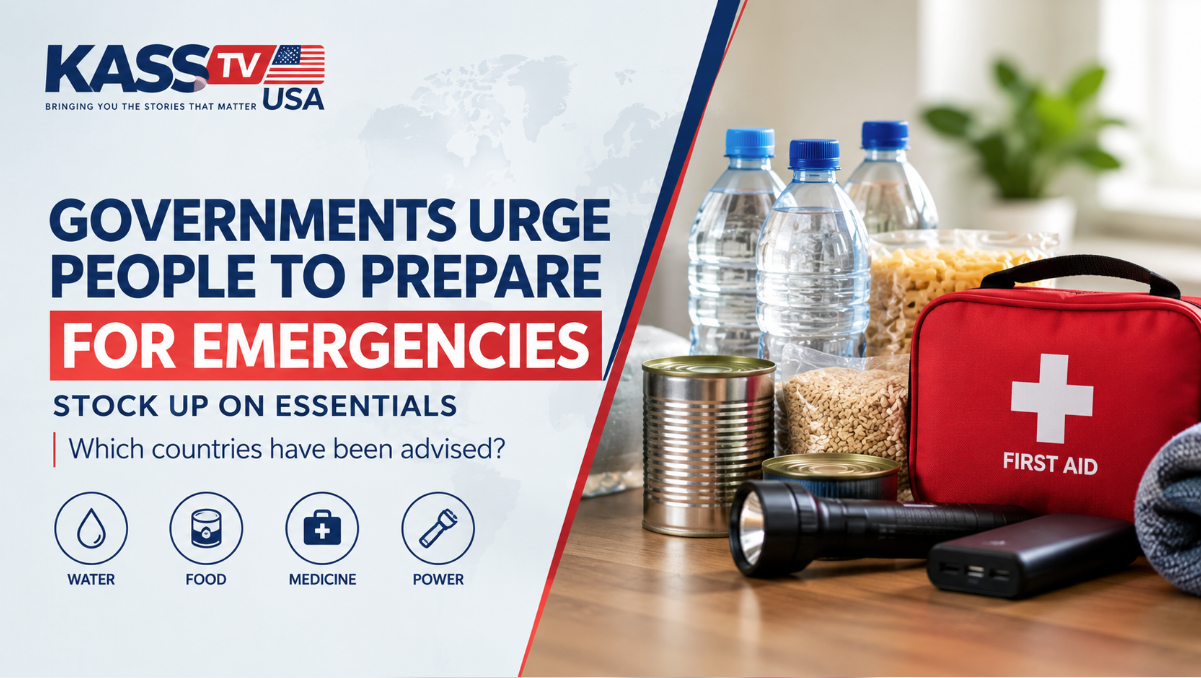
Emergency planners commonly recommend considering the following essentials:
Food and drinking water
- Bottled or safely stored drinking water.
- Canned foods and other non-perishable meals.
- Ready-to-eat foods that do not require cooking.
- Baby food and infant-feeding supplies where needed.
- Special dietary foods for family members with specific needs.
Health and personal care
- Regular prescription medicines and essential medical supplies.
- A basic first-aid kit.
- Soap, sanitary products and other personal hygiene items.
- Toiletries, including nappies for babies.
Power and communication
- A fully charged power bank.
- Flashlights and spare batteries.
- A battery-powered or hand-crank radio.
- Charging cables and, where practical, alternative charging options.
Important documents and money
- Some cash in small denominations.
- Copies of identification documents and essential records.
- Emergency contact numbers written on paper.
- Spare keys and other necessary household items.
Family emergency planning
- Agree on a meeting point in case family members become separated.
- Know how to contact relatives if mobile networks are disrupted.
- Identify evacuation routes and nearby safe locations.
- Make arrangements for children, older family members and pets.
The quantities should reflect the number of people in the household, the local risks and official advice. Families should also check expiry dates, rotate stored food and water where appropriate, and keep medicines under the conditions recommended for them.
WHY IS THE 72-HOUR PERIOD SO IMPORTANT?
The recommendation to prepare for 72 hours, or three days, is based on the practical reality that emergency response and the restoration of services can take time.
After a major flood, earthquake, storm or infrastructure failure, authorities may initially concentrate on rescuing people, treating injuries and protecting those in immediate danger.
Roads may be blocked, shops may be closed, and deliveries may be delayed. Electricity and telecommunications may also take time to restore.
A household with basic supplies can therefore manage more safely while waiting for assistance.
Preparedness also allows emergency services to prioritise people who cannot safely look after themselves, including those with serious medical needs.
However, 72 hours is a starting point, not a guarantee that every emergency will end within three days. Japan and some other countries encourage longer preparations where circumstances allow.
IS THE WORLD PREPARING FOR WORLD WAR THREE?
The growing number of emergency preparedness campaigns has raised questions online about whether governments know something the public does not.
The concern is understandable. When several countries simultaneously encourage people to prepare for disruptions, it can create the impression that a major international crisis is approaching.
However, the available evidence does not establish that a world war is imminent.
The European Union’s preparedness strategy addresses a broad range of risks, including geopolitical tensions, cyberattacks, health emergencies, climate-related disasters and threats to critical infrastructure.
Japan’s preparations are heavily influenced by its exposure to earthquakes and volcanic activity. The United States also maintains disaster preparedness programmes for hazards ranging from hurricanes to wildfires.
The UK’s October 2026 campaign similarly emphasises readiness for disruptions caused by severe weather and other emergencies, including cyber incidents.
These measures reflect a broader shift towards preparing for multiple possible scenarios rather than relying entirely on emergency services once a crisis begins.
Nevertheless, geopolitical tensions and national-security concerns remain part of the wider international picture.
The key distinction is that preparing for a possible emergency does not mean a government knows that a specific disaster or war is about to happen.
WHAT DOES THIS MEAN FOR KENYA AND AFRICA?
Although the latest international headlines focus heavily on Europe, Japan and the United States, the underlying lesson is relevant to Kenya and other African countries.
Families can face disruptions caused by flooding, drought, severe weather, disease outbreaks, transport interruptions and interruptions to electricity or water supplies.
Kenya has also been strengthening its preparedness for the anticipated October–December 2026 rains. In September, the Kenya News Agency reported that the government was preparing counties for potential flooding, identifying evacuation areas and positioning humanitarian supplies.
This is a reminder that emergency preparedness is not exclusively about international conflict. It is also about responding to familiar risks that can threaten lives, livelihoods and access to essential services.
For Kenyan households, practical measures may include keeping drinking water safely stored, maintaining a small reserve of non-perishable food, ensuring essential medicines are available and following official weather warnings.
Families living in flood-prone areas should pay particular attention to evacuation guidance and avoid crossing flooded roads or rivers.
Households should also avoid panic buying or spending money they cannot afford on unnecessary emergency equipment. Preparation can be built gradually around normal household shopping.
WHAT SHOULD YOU DO NOW?
The message from emergency authorities is straightforward: prepare sensibly, stay informed and avoid panic.
Start by checking what you already have at home. Set aside essential supplies, identify anything missing and build a small emergency kit according to your family’s needs.
Follow official government advisories rather than unverified social media claims. If an emergency occurs, use trusted information sources and follow instructions from the relevant authorities.
Most importantly, do not confuse general preparedness recommendations with a specific warning that a major conflict is about to begin.
FINAL WORD
From Britain and France to Japan, Denmark and the United States, emergency preparedness is receiving renewed attention as governments consider how households can cope with disruptions to essential services.
The reasons differ across countries, but the principle is consistent: a little preparation before an emergency can make a significant difference when normal services are interrupted.
Whether the threat is a natural disaster, a cyberattack, a prolonged power outage or another unexpected crisis, households that plan ahead are better positioned to protect themselves and support their communities.
Preparedness is not panic. It is planning for the unexpected.
KASSMTV USA — Bringing You the Stories That Matter.
